.png)


Raising Body Positive Kids

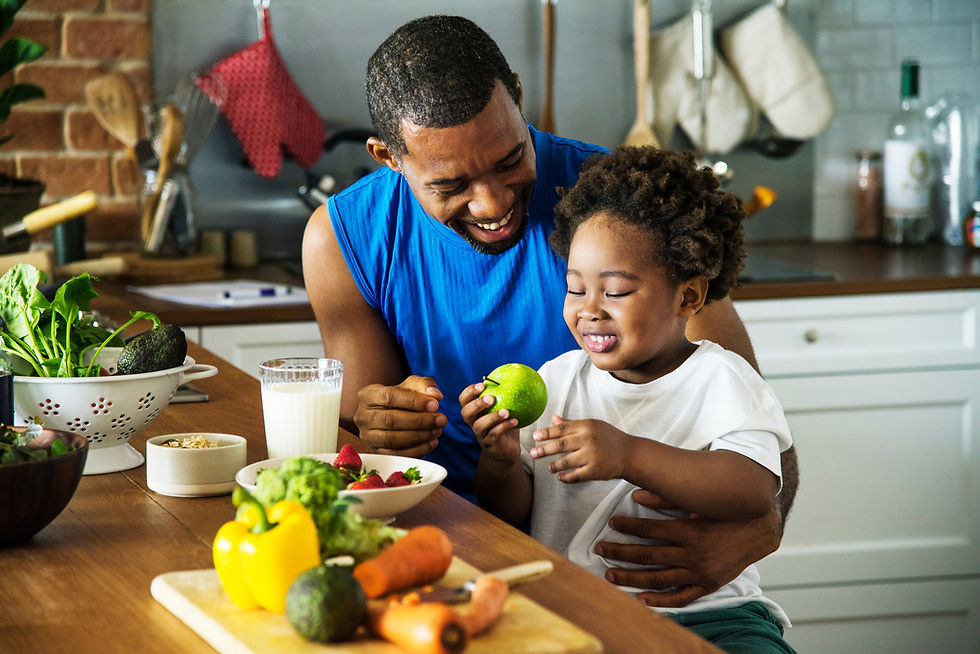
As parents and educators, we have a powerful role in shaping how children see themselves. Body image does not suddenly appear in the teenage years—it begins early, through everyday conversations, subtle comments, and the environment we create around them.
Children are constantly observing. They are listening to how we talk about others, how we talk about ourselves, and how we respond to their growing bodies. Over time, those small moments become their inner voice.
This is exactly why I created Bella Bunny. I wanted to give families and care givers a tool to start these conversations early—before negative patterns take hold—and to help children understand that their worth is not defined by their appearance.
If we want to raise body-positive kids, we must be intentional. Here are the most important ways to do that in a meaningful, lasting way:
1. Don’t Comment on Other People’s Bodies
One of the simplest and most powerful shifts we can make is to stop commenting on other people’s bodies altogether.
Even comments that seem harmless—“She looks so thin,” or “He’s gained weight”—teach children that bodies are something to evaluate. They begin to understand that appearance is important, and more importantly, that it is something others are judging.
Instead, we can model a different way of seeing people:
Notice kindness
Acknowledge effort
Highlight character
For example:
“She worked so hard on that performance.”
“He’s such a great teammate.”
When we consistently shift the focus away from appearance, children learn that people are valued for who they are, not what they look like. This lays the foundation for both body respect and empathy.
2. Be Mindful of How You Talk About Your Own Body
Children learn how to speak to themselves by listening to how you speak about yourself.
If they hear:
“I hate how I look in this”
“I feel so fat today”
“I need to lose weight”
They begin to internalize that same critical language. Even if those comments are not directed at them, they absorb the message that bodies are something to be dissatisfied with.
Instead, model a healthier relationship with your body:
“I feel strong today.”
“I’m taking care of my body.”
“I’m grateful for what my body allows me to do.”
This doesn’t mean you have to feel perfect about your body at all times. It simply means choosing language that reflects respect instead of criticism.
Children who grow up hearing this kind of language are far more likely to develop confidence and appreciation for their own bodies.
3. The Body Is Not the Problem—The Clothes Are
This is one of the most important mindset shifts we can teach.
When something doesn’t fit, the natural tendency is to think the body needs to change. But that message can be incredibly damaging, especially to a growing child.
The truth is simple: Bodies are not meant to fit clothes. Clothes are meant to fit bodies.
Even casual comments can unintentionally send the wrong message. For example:
“We need to feed you some cookies so this fits.”
While it may be said jokingly, what a child hears is that their body is not right.
A more supportive response would be:
“Let’s adjust this so it fits you perfectly.”
This reinforces the idea that their body is exactly as it should be—and that external things can be adapted to them.
This applies to all children, in all body types. Whether a child is smaller, taller, broader, or anything in between, the message remains the same: Your body is not the problem.
4. Don’t Add a “But” After Positive Reinforcement
This is a small habit that can have a big impact.
When we follow a positive statement with “but,” we unintentionally cancel out the affirmation we just gave.
For example:
“You don’t need to diet… but if you wanted to lose weight, you could stop eating chips”
What the child hears is not the reassurance—it’s the criticism that follows.
The word “but” signals that the first part of the sentence isn’t the full truth. It creates confusion and often reinforces insecurity.
Instead, let your positive statements stand on their own:
“You don’t need to diet.”
“Your body is exactly where it needs to be.”
“You are healthy and strong.”
Clear, confident language builds trust. It tells children that you truly believe what you are saying, and it gives them permission to believe it too.
5. Shift the Way We Give Compliments
The way we compliment other people shapes what your children value about themselves.
Comments like:
“You look so thin”
“You’ve lost weight”
may seem positive, but when your kids hear this, it reinforces the idea that appearance—and specifically size—is what matters most. Skinny= good, loosing weight= positive.
Over time, children may begin to tie their self-worth to those types of comments.
Instead, focus on qualities that build confidence and identity:
“You look strong.”
“You’re glowing.”
“You look so confident.”
“I love your energy.”
These types of compliments encourage children to value how they feel, how they carry themselves, and who they are—not just how they look.
6. Reinforce the Message Through Story
Children often understand big ideas best through storytelling.
That’s where Bella Bunny becomes such a meaningful tool. Through Bella’s journey, children are introduced to the idea that:
Every body is different
Every body is valuable
Confidence comes from within
Stories create connection. They allow children to see themselves in the character, to process emotions safely, and to build understanding in a way that feels natural.
Reading stories like Bella Bunny together also creates an opportunity for conversation—giving parents and teachers a way to reinforce these messages in a supportive and engaging way.
The Bigger Picture
Raising body-positive kids is not about one conversation or one lesson. It is about creating a consistent environment where children feel valued, respected, and accepted exactly as they are.
It’s found in:
The words we choose
The behaviors we model
The corrections we make in everyday moments
When we shift the focus away from appearance and toward strength, confidence, character, and self-respect, we give children something far more powerful than body positivity.
We give them self-worth.
And when a child grows up believing they are worthy—not because of how they look, but because of who they are—they carry that confidence into every part of their life.
That is the goal. That is the impact. And that is the kind of confidence that truly lasts. Nina Koch is a dance educator, author, entrepreneur, and business coach with over two decades of experience helping dancers, teachers, and studio owners grow with confidence, purpose, and excellence. As the founder of East County Performing Arts Center and creator of the Bella Bunny series, she is passionate about building strong, positive cultures both in the classroom and in business.
Learn more at www.missninak.com and www.eastcountypac.com.


Comments